SEO Builds Long-Term Visibility
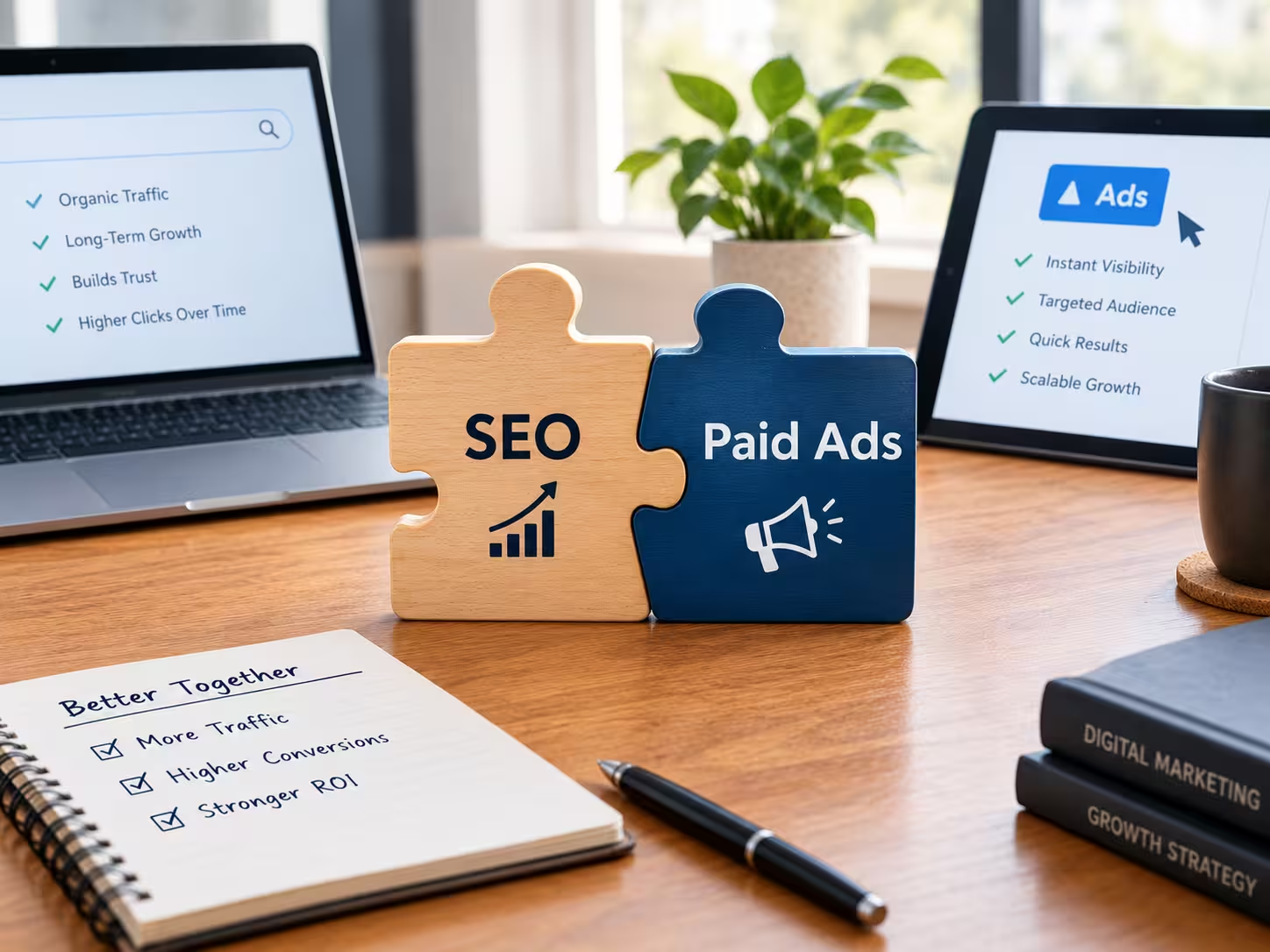
SEO (Search Engine Optimization) helps your website rank organically on search engines like Google. The goal is to attract traffic naturally without paying for every click.
SEO focuses on: – Website optimization – Content creation – Keyword targeting – Technical improvements – Backlinks and authority – User experience
The biggest advantage of SEO is that it can continue bringing traffic even when you’re not actively spending money on ads.
But SEO takes time.
Results usually build gradually over months, not days.
Paid Ads Deliver Immediate Visibility
Paid ads, such as Google Ads and Meta Ads, allow you to appear in front of your audience immediately.
You can: – target specific keywords – reach particular demographics – generate leads quickly – test offers fast – scale campaigns rapidly
The biggest advantage of paid advertising is speed.
The downside is that traffic stops when the budget stops.
This is why businesses that rely only on paid ads can become dependent on continuous spending.
Why SEO Alone Can Be Limiting
SEO is powerful, but it is rarely the fastest way to grow a business from scratch.
Here are some common challenges when relying only on SEO:
– New websites take time to rank. – Competitive keywords are difficult to win quickly. – Traffic growth can be slow in the beginning. – Results are less predictable short-term. – You may wait months before seeing strong lead flow.
For businesses needing immediate leads, SEO alone may feel frustrating.
Imagine opening a new business and waiting six months for customers to find you organically. Most businesses cannot afford to wait that long without additional visibility.
Why Paid Ads Alone Can Also Be Limiting
Paid ads solve the speed problem, but they create a different challenge.
If ads are your only source of traffic: – leads stop when campaigns stop – costs can increase over time – competition can drive up ad prices – you remain dependent on paid acquisition
Many businesses experience this cycle: – Run ads – Get leads – Stop ads – Leads disappear
This is not sustainable long-term unless margins are extremely strong.
Paid ads are excellent for growth, but they work best when supported by strong organic visibility.
How SEO and Paid Ads Work Better Together
This is where the real opportunity begins.
Instead of choosing between SEO and paid ads, smart businesses combine both.
Here is why the combination is so effective.
1. Paid Ads Bring Immediate Traffic While SEO Builds Momentum
SEO takes time to grow. Paid ads fill that gap.
While your SEO strategy is building authority, paid ads can: – generate leads immediately – drive targeted traffic – test which keywords convert best – validate offers quickly
This prevents your business from waiting months for visibility.
2. SEO Improves The Performance Of Paid Ads
A well-optimized website often improves ad performance too.
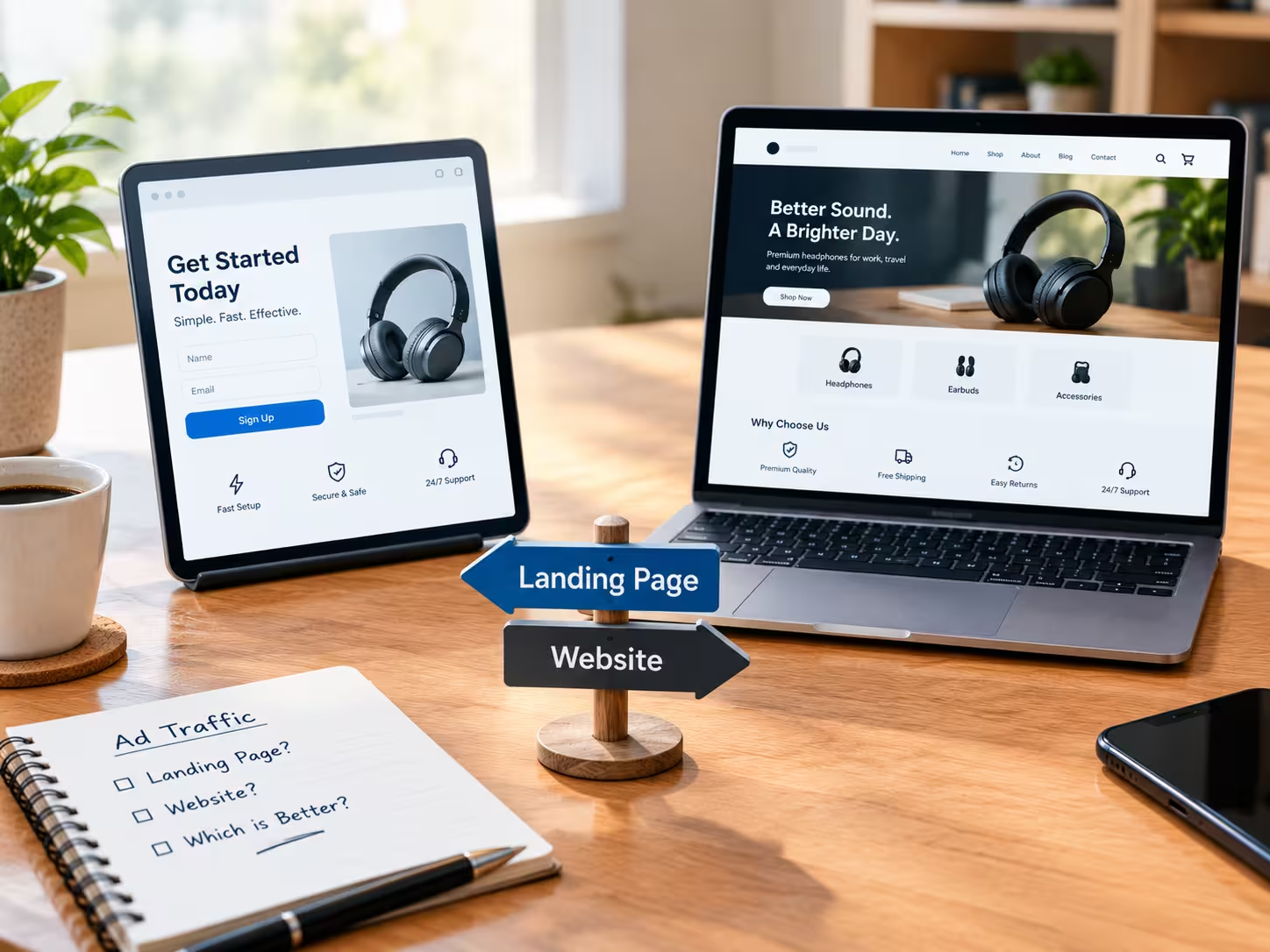
Google Ads considers landing page quality, relevance, and user experience. Strong SEO practices usually improve: – page speed – mobile usability – content quality – relevance – navigation
This can lead to: – better Quality Scores – lower cost per click – higher conversion rates
So SEO indirectly helps reduce advertising costs.
3. Paid Ads Help Identify High-Converting Keywords
One of the smartest uses of paid ads is keyword testing.
You can quickly discover: – which keywords generate leads – which messaging works – which pages convert best
Then you can use those insights to strengthen your SEO strategy.
Instead of guessing what people search for, you use real conversion data.
4. Multiple Touchpoints Increase Trust
Customers rarely buy after seeing your business only once.
A person may: – see your Facebook ad – search your business on Google – visit your website – read a blog post – see a Google ad later – finally contact you
This combination builds familiarity and trust.
When your business appears both organically and through ads, it creates a stronger presence in the customer’s mind.
5. You Reduce Dependence On One Traffic Source
Depending entirely on one channel is risky.
If: – ad costs increase – algorithm changes happen – rankings fluctuate – platform policies change
your lead flow can be affected.
A mixed strategy creates stability.
SEO + paid ads gives you: – immediate lead generation – long-term traffic growth – better brand visibility – stronger marketing resilience
When Should You Focus More On SEO?
SEO deserves extra focus when: – you want long-term growth – your industry has strong search demand – you publish content regularly – your website is a major lead source – you want to reduce long-term acquisition costs
SEO is especially valuable for businesses that want sustainable visibility over time.
When Should You Focus More On Paid Ads?
Paid ads deserve extra focus when: – you need leads quickly – you are launching a new offer – you want fast testing – you operate in a highly competitive market – you have a proven sales process – you want scalable growth
Paid advertising is excellent for acceleration and immediate reach.
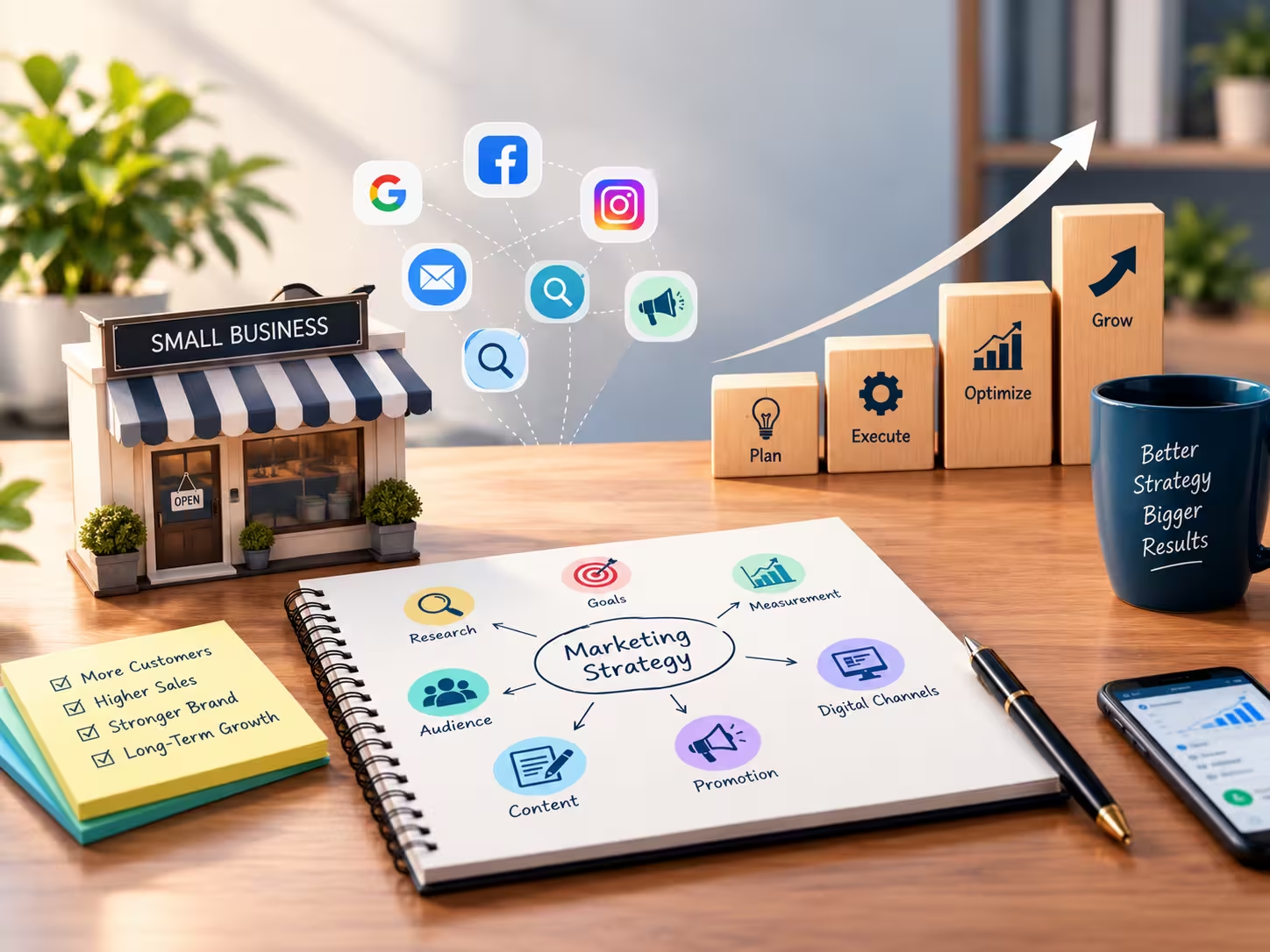
A Simple Strategy For Small Businesses
You do not need a huge budget to combine SEO and paid ads.
A practical approach looks like this:
Step 1: Build A Strong Website Foundation
Make sure your website: – loads fast – works on mobile – explains your services clearly – has clear calls-to-action
Step 2: Start Basic SEO
Focus on: – keyword-optimized pages – local SEO – Google Business Profile – helpful content – technical optimization
Step 3: Run Targeted Paid Ads
Start with campaigns that support your immediate goals: – lead generation – local visibility – remarketing – service promotion
Step 4: Use Data From Ads To Improve SEO
Identify: – high-performing keywords – strong landing pages – customer behavior – conversion trends
Then optimize your SEO content accordingly.
This creates a cycle where both strategies strengthen each other.
The Biggest Mistake Businesses Make
The biggest mistake is treating SEO and paid ads as separate departments that do not communicate.
When SEO teams and ad campaigns work independently, businesses miss valuable insights.
For example: – ad data can improve SEO targeting – SEO content can improve ad landing pages – organic performance can guide ad strategy
The best results happen when both strategies are aligned around the same business goals.
Final Thoughts
The question should not be:
“SEO vs paid ads — which is better?”
The better question is:
“How can SEO and paid ads work together to grow my business faster and more sustainably?”
Paid ads deliver speed.
SEO delivers longevity.
Together, they create a stronger, more reliable marketing system than either strategy alone.
Businesses that combine both often see: – faster lead generation – better brand visibility – improved conversion rates – lower long-term acquisition costs – more stable growth
Instead of choosing one side, build a strategy where both support each other.
That is where real marketing momentum happens.