
#Blog 6
Why Boosting Facebook Posts Is Not the Same as Running Ads
Thinking about boosting a Facebook post? Understand what you're actually paying for before you spend more of your marketing budget.
Boosting Facebook posts can look like an easy way to advertise your business.
You create a post, publish it on your Facebook page, and then Facebook shows you a button that says "Boost Post." You choose an audience, set a budget, select how long you want the promotion to run, and you're done.
It feels simple.
And sometimes, boosting a post can be useful.
But there is an important difference between boosting a Facebook post and running a properly structured Facebook or Meta Ads campaign.
Many business owners assume they are basically the same thing because both involve paying Facebook to show content to more people.
They aren't.
Boosting Facebook Posts vs Facebook Ads
The biggest difference is what you can control, what you can optimize, and what you're trying to achieve.
If your goal is simply to get more people to see a post, boosting may be enough.
But if your goal is to generate qualified leads, sales, enquiries, or measurable business results, you need to think beyond simply promoting a post.
Let's look at the difference in simple terms.
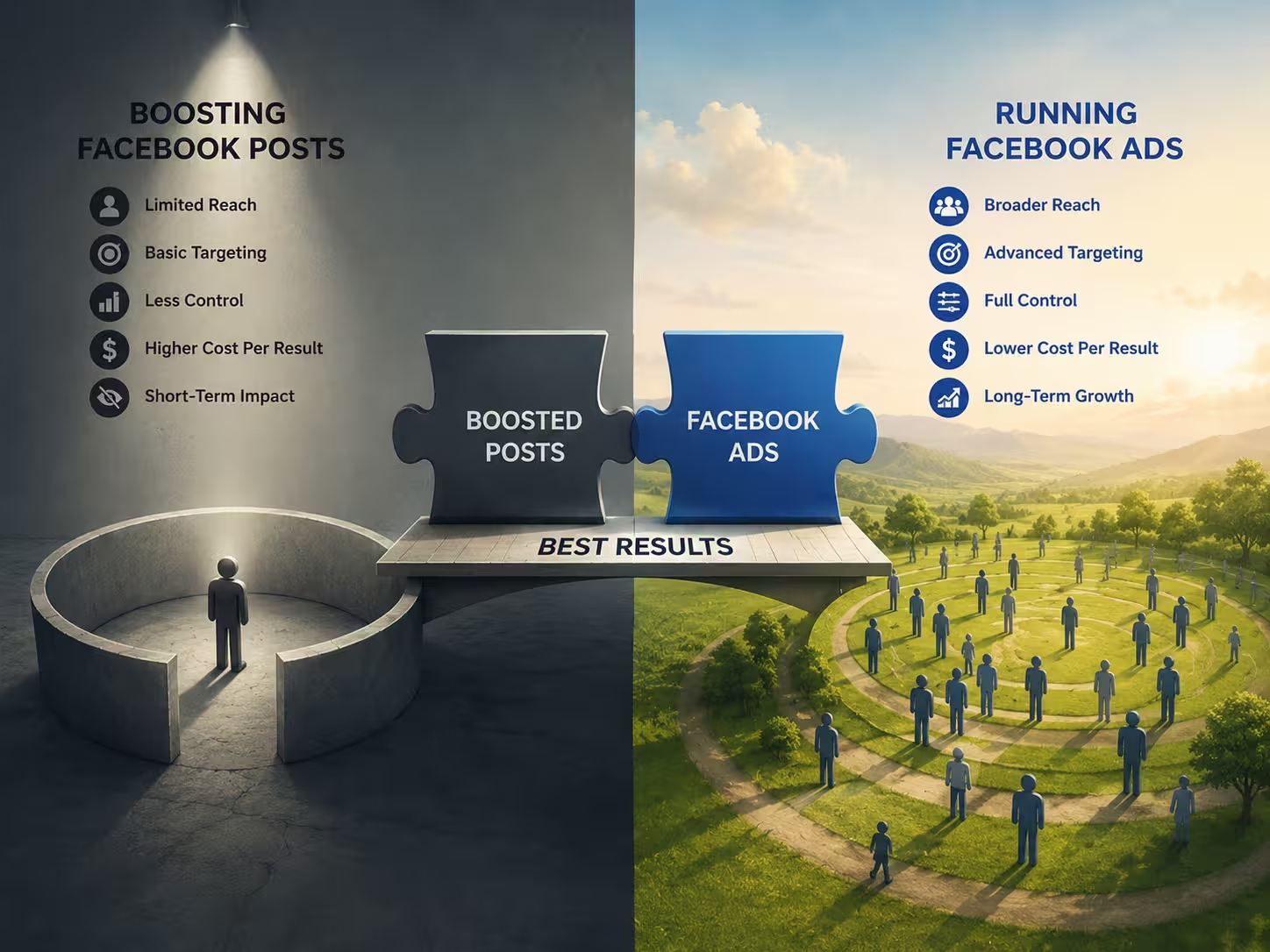
What Does Boosting a Facebook Post Actually Do?
When you boost a post, you’re taking something you’ve already published on your Facebook page and paying to put it in front of a larger audience.
For example, imagine you run a local restaurant.
You publish a post showing a new weekend offer.
Normally, only a portion of your existing followers and Facebook users may see it.
You can then boost that post and tell Facebook that you’d like more people to see it.
You can usually select basic things such as:
- Location
- Audience
- Budget
- Duration
- Goal
Facebook then distributes the post according to those settings.
This can be useful when your objective is straightforward.
Maybe you want more people in your local area to discover your business.
Maybe you have an announcement you want more people to see.
Maybe you have a particularly engaging post that you want to put in front of a larger audience.
For those situations, boosting can make sense.
The problem begins when a business owner expects a boosted post to work like a carefully planned advertising campaign.
Running Ads Gives You Much More Control
A proper Meta Ads campaign is built inside Meta Ads Manager.
Instead of simply promoting an existing post, you build a campaign around a specific business objective.
Depending on what you’re trying to achieve, you can structure campaigns for things such as:
- Leads
- Sales
- Website conversions
- Traffic
- Engagement
- App activity
You also have significantly more control over how the campaign is structured.
You can test different audiences, creatives, messages, placements and offers.
This matters because successful performance marketing isn’t simply about getting your content in front of more people.
It’s about finding the right people, showing them the right message, and encouraging them to take the right action.
The Biggest Difference Is Your Objective
Think about these two situations.
Situation 1: You want more people to see your post
You have created a useful announcement about your business.
You want local people to know about it.
Boosting the post may be perfectly reasonable.
Your primary goal is visibility.
Situation 2: You want 20 new enquiries
Now the situation is different.
You don’t simply want people to see your content.
You want potential customers to:
See the ad → become interested → click → submit an enquiry → become a customer.
That requires a much more deliberate campaign.
You need to think about the audience, offer, creative, landing page or lead form, conversion tracking, follow-up and overall customer journey.
This is where proper Meta Ads management becomes much more valuable than simply pressing “Boost.”
Boosting Can Focus Too Much on Engagement
One reason businesses get confused is that boosted posts can generate impressive-looking numbers.
You might see:
25,000 people reached
800 reactions
100 comments
50 shares
At first glance, that looks fantastic.
But then you ask:
“How many customers did we get?”
The answer might be very different.
This doesn’t mean engagement is useless.
Engagement can be valuable for building awareness and social proof.
But likes and comments aren’t the same thing as revenue.
A business needs to understand what it actually wants from its advertising.
If you’re selling a service, five genuinely interested enquiries can be much more valuable than hundreds of reactions from people who were never going to buy.
Proper Ads Let You Test Different Ideas
This is another major difference.
Imagine you’re selling a service and you have three different messages:
Ad A: Save Time With Professional Help
Ad B: Get More Customers Without Guessing
Ad C: Stop Wasting Money on Marketing
Which one will work best?
You don’t have to guess.
A properly structured advertising campaign can test different creative approaches and gather performance data.
Over time, you can learn which:
- Message gets attention
- Creative generates clicks
- Audience responds best
- Offer generates enquiries
- Landing page converts better
That information can then be used to improve the campaign.
Boosting a single post doesn’t give you the same level of strategic testing and control.
Your Best Facebook Post Isn’t Necessarily Your Best Ad
This is an important point.
A post that gets lots of likes organically isn’t automatically the best post for generating customers.
People engage with content for many reasons.
They might find something funny.
They might agree with an opinion.
They might enjoy a photograph.
They might share an interesting story.
But none of that guarantees that the person will buy something.
An effective ad needs to connect with a business objective.
A post can be entertaining and still be a poor sales message.
Likewise, an ad that generates fewer likes may produce significantly more enquiries.
That’s why performance should be judged by the outcome you actually want.
Audience Targeting Is More Important Than Many Businesses Realize
When you boost a post, you can select an audience, but the targeting experience is generally more simplified.
With a properly managed Meta Ads campaign, you have more opportunities to build and test audiences based on your campaign strategy.
For example, you might want to reach:
- New potential customers
- People who previously visited your website
- People who interacted with your Instagram account
- People who watched your videos
- People who added products to their cart
- Existing customers
- Similar audiences where appropriate
Different audiences can require completely different messages.
Someone who has never heard of your business shouldn’t necessarily see the same message as someone who visited your website yesterday.
That difference becomes especially important when you’re trying to turn advertising into a predictable customer acquisition system.
Retargeting Is Another Major Advantage
Imagine someone visits your website after seeing one of your ads.
They look at your service.
They don’t contact you.
Does that mean they’re not interested?
Not necessarily.
They may have been busy.
They may want to compare alternatives.
They may need more time to make a decision.
With a proper advertising strategy, you can potentially reach people again through retargeting.
For example, someone who visited your website could later see another ad explaining your offer, showing a testimonial, or answering a common concern.
This gives your business another opportunity to convert an interested visitor.
That kind of customer journey is much harder to achieve when your advertising strategy is simply:
Create post → Boost post → Wait.
Measurement Matters More When You’re Spending Money
If you’re putting money into advertising, you should know what that money is producing.
A good advertising setup should allow you to look beyond basic engagement.
Depending on your objective, you may want to understand:
How many people clicked?
How many became leads?
How much did each lead cost?
How many purchases happened?
How much revenue came from the campaign?
Which audience performed best?
Which creative generated the strongest results?
These questions turn advertising from a guessing game into a measurable business activity.
And that is one of the biggest differences between casually promoting content and managing performance campaigns.
So, Is Boosting a Facebook Post Bad?
No.
That’s not the right conclusion.
Boosting can be useful.
If your goal is to increase visibility for a particular post, promote an announcement, support an event, or get more engagement, boosting may be a simple option.
The problem is expecting it to replace a complete advertising strategy.
Think of boosting as a simple promotional tool.
Think of Meta Ads Manager as a full advertising system.
One isn’t automatically “bad” while the other is “good.”
They simply serve different purposes.
When Should You Boost a Post?
Boosting may make sense when:
You have an important announcement and want more people to see it.
You have content that is already performing well organically and want to extend its reach.
You want to increase engagement or awareness.
You are promoting an event or local activity.
Your advertising objective is relatively simple.
In these situations, simplicity can actually be an advantage.
You don’t always need a complicated campaign for every piece of content.
When Should You Run a Proper Meta Ads Campaign?
You should think more seriously about Ads Manager when your objective is business performance.
For example:
You want consistent lead generation.
You want to generate sales from an eCommerce store.
You want to retarget website visitors.
You want to test multiple audiences.
You want to compare different creatives.
You want to measure conversions.
You want to scale campaigns that are producing profitable results.
At that point, simply boosting posts can leave too much opportunity on the table.
The Question You Should Ask Before Spending Your Money
Instead of asking:
“Should I boost this post?”
Ask:
“What do I want this money to achieve?”
If the answer is:
“I want more people to see this post,”
boosting might be enough.
If the answer is:
“I want more qualified customers and I want to know how much I’m paying to acquire them,”
then you need a more complete advertising strategy.
That simple distinction can prevent a lot of wasted advertising spend.
Final Thoughts
Boosting Facebook posts isn’t necessarily a bad way to promote your business.
It’s just not the same as running a properly planned Meta Ads campaign.
Boosting is designed to make promotion simple.
Performance advertising is designed to give you more control over the journey from audience to action.
If your main goal is visibility or engagement, boosting may be perfectly suitable.
But if you’re investing in advertising because you want leads, sales, customers and measurable returns, you should think beyond the Boost button.
Because successful advertising isn’t about simply reaching more people.
It’s about reaching the right people with the right message and giving them a clear reason to take action.