For a service business, that might mean submitting a form or calling you.
For an eCommerce business, it could mean adding a product to the cart and completing a purchase.
And even after someone becomes a lead, they still have to become a customer.
So when someone says, “My ads aren’t working after three days,” there may not yet be enough information to make that conclusion.
At the same time, waiting indefinitely isn’t the answer either.
The important thing is knowing what to look at and when.
What Can Happen During the First Few Days?
When a new campaign starts, the first stage is largely about gathering information.
Your ads begin reaching people.
You start seeing impressions.
Some people click.
Others ignore the ads.
Some may visit your website.
Depending on your campaign and business, you may also start receiving enquiries or purchases.
But early results can fluctuate significantly.
One day might look promising.
The next day might look disappointing.
That’s normal.
A small amount of data can be heavily influenced by individual users and random variation.
For example, if you receive one sale on the first day, that doesn’t automatically mean you’ve found a highly profitable campaign.
And if you receive no sales in the first few days, it doesn’t automatically mean the campaign is a failure.
You need enough data to identify a pattern.
Google Ads and Meta Ads Can Behave Differently
It’s also important to understand that Google Ads and Meta Ads aren’t identical.
Google Ads can place your business in front of people who are actively searching for something.
For example:
“emergency plumber near me”
or
“accountant for small business”
That person already has a problem or need.
If your business is a good match and your ad and landing page are strong, that existing intent can sometimes lead to relatively quick enquiries.
Meta Ads work differently.
Someone scrolling through Facebook or Instagram may not be actively searching for your product or service at that moment.
Your ad has to create interest and convince them to stop scrolling.
This doesn’t mean Meta Ads are slower or worse.
It means the customer journey can be different.
A person may see your ad today, visit your website tomorrow, come back later and finally make a purchase.
That’s why the expected timeline can vary significantly between campaigns.
Seeing Clicks Is Not the Same as Seeing Results
This is one of the most important things for a business owner to understand.
Suppose you spend money on an advertising campaign and receive:
10,000 impressions
300 clicks
Those numbers may look encouraging.
But what happened after the clicks?
Did anyone contact you?
Did anyone request a quote?
Did anyone purchase?
Did the people who clicked actually match your target customers?
If the answer is no, then the campaign hasn’t necessarily achieved your business objective.
Likewise, a campaign with fewer clicks can sometimes be much more valuable if those clicks produce qualified leads or sales.
That’s why you shouldn’t judge advertising simply by traffic.
The real question is:
What happened after people clicked?
Your Business Type Can Change the Timeline
Consider two businesses.
The first sells a ₹1,000 product.
The second sells a service worth ₹1,00,000.
The customer decision process is likely to be very different.
A person may buy a relatively inexpensive product after seeing one or two ads.
But someone considering a high-value service may need to:
Research the company.
Compare alternatives.
Speak with someone.
Ask questions.
Discuss the purchase with a partner or team.
Then make a decision.
The second business may therefore need more time and more touchpoints before seeing consistent results.
This is why comparing your advertising timeline with another business can be misleading.
Your Offer Matters More Than You Might Think
You can have a well-targeted campaign and still struggle if the offer isn’t compelling.
Imagine two businesses selling similar services.
Business A says:
“We provide digital marketing services.”
Business B says:
“Get a clear plan to reduce wasted ad spend and generate more qualified enquiries.”
The second message gives a potential customer a stronger reason to pay attention.
Advertising doesn’t fix every business problem.
If customers don’t understand what you’re offering or why they should choose you, better targeting alone won’t solve the problem.
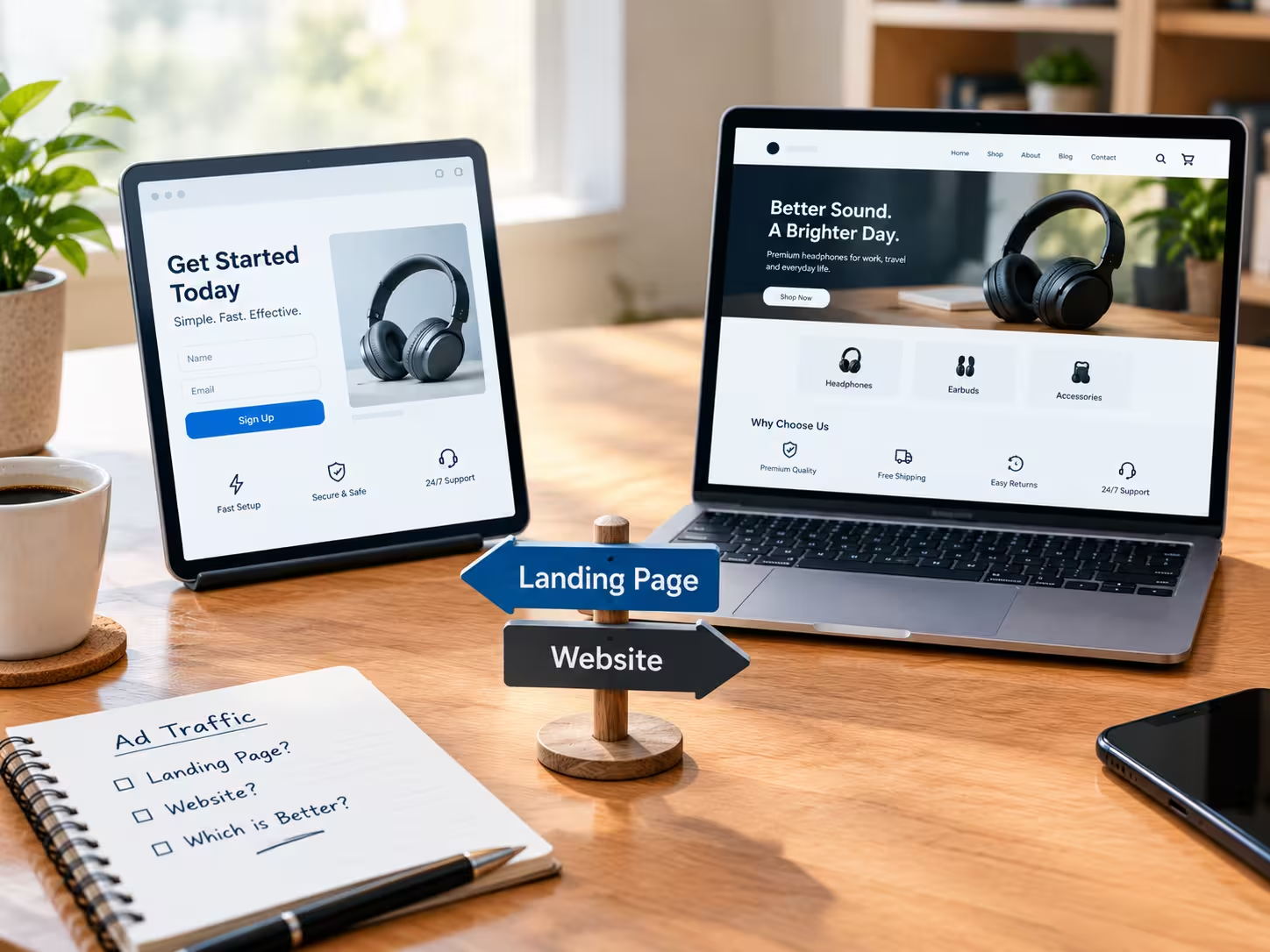
Your Website Can Affect How Quickly You See Results
Imagine your ad is excellent.
The right person clicks.
Then they land on a confusing website.
The page loads slowly.
The offer isn’t clear.
There is no obvious next step.
There are no trust signals.
The visitor leaves.
Was the ad the problem?
Not necessarily.
The advertising successfully brought the person to your business.
The conversion process failed afterward.
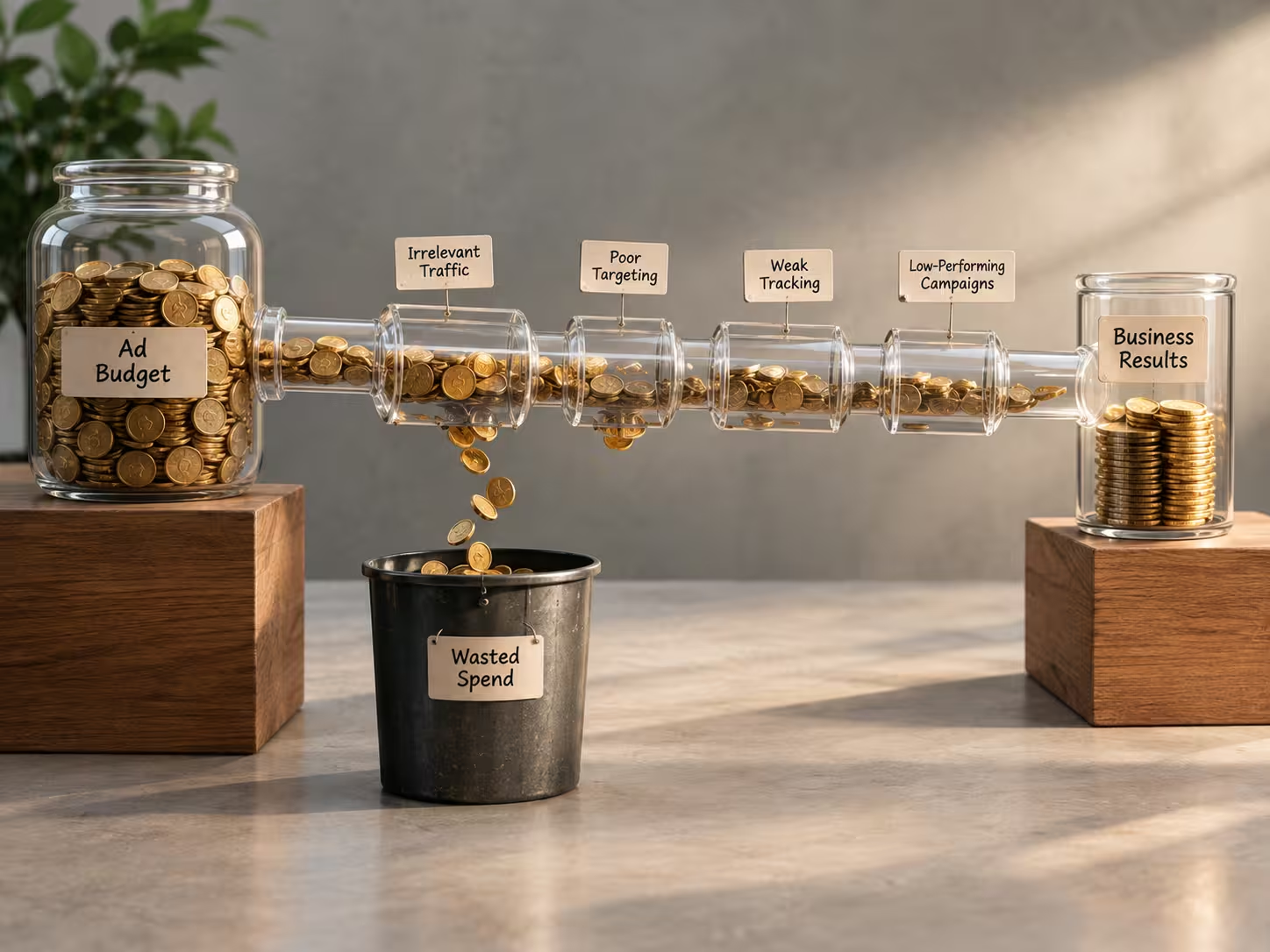
This is why evaluating results from Google and Meta Ads requires looking at the entire journey, not just the advertisement itself.
Ad → Click → Landing Page → Enquiry/Purchase → Customer
Every step matters.
Your Budget Also Affects How Quickly You Learn
Budget isn’t simply about spending more to get faster results.
But a very small budget can make it difficult to gather enough information.
Imagine spending a tiny amount every day across several different audiences and creatives.
Each variation may receive very little data.
It becomes difficult to determine whether something is genuinely performing well or simply hasn’t had enough opportunity.
A sensible advertising budget should give the campaign enough room to gather useful information while still being appropriate for the business.
This is one reason there isn’t a universal answer to:
“How much should I spend before I see results?”
The answer depends on your market, customer value, competition and advertising objective.
What Should You Look At Before Expecting Sales?
Before judging the final result, look at the stages leading to it.
Are people seeing your ads?
If not, there may be an issue with delivery, budget, audience size or campaign setup.
Are people clicking?
If impressions are healthy but very few people click, your message or creative may not be connecting.
Are visitors taking action?
If people click but don’t enquire or purchase, the problem may be your offer, landing page or customer journey.
Are the leads actually good?
Getting enquiries isn’t enough if they’re from people who aren’t suitable customers.
Are those leads becoming customers?
This is where your sales process becomes important.
A campaign can generate leads successfully while the business still struggles to turn those leads into revenue.
Looking at the complete funnel gives you a much clearer picture.
Don’t Make Major Changes Every Day
One of the biggest mistakes business owners can make is constantly changing the campaign because they don’t see immediate results.
Monday:
“Let’s change the audience.”
Tuesday:
“Let’s change the creative.”
Wednesday:
“Let’s change the budget.”
Thursday:
“Let’s stop the campaign.”
This creates another problem.
Now you don’t know which change caused which result.
Advertising needs monitoring, but monitoring doesn’t mean changing everything every day.
Sometimes the campaign needs time to gather useful information.
Other times, early data clearly shows that something needs attention.
The skill is knowing the difference.
When Should You Start Evaluating the Campaign?
There isn’t a universal number of days, but you should evaluate campaigns based on meaningful data rather than the calendar alone.
If the campaign has generated enough impressions, clicks, conversions or other relevant actions, you can begin identifying patterns.
For example, you may discover:
- One creative attracts much more attention.
- One audience generates better leads.
- One product receives many clicks but few purchases.
- One landing page converts better.
- One campaign produces leads at a much lower cost.
These insights are more useful than simply saying:
“The campaign has been running for 14 days.”
Time matters, but data matters more.
What If You Aren’t Getting Any Results?
This is where you shouldn’t simply wait longer.
If you’re getting impressions but almost no engagement, investigate the ad.
If you’re getting clicks but no meaningful actions, investigate the landing page, offer and conversion process.
If you’re getting leads but poor-quality ones, investigate targeting and messaging.
If you’re getting good leads but no customers, investigate your sales process.
The answer isn’t always:
“Give it more time.”
Sometimes the campaign needs a change.
The important thing is making that change based on evidence rather than frustration.
What Does “Good Results” Actually Mean?
This is another question businesses should answer before starting a campaign.
For one business, success might mean:
20 qualified enquiries per month.
For another:
10 new customers.
For an eCommerce business:
₹2,00,000 in monthly revenue at a profitable return.
For a local service business:
Five high-value customers every month.
Without defining success, it’s difficult to know whether the campaign is actually performing well.
You shouldn’t measure success simply by asking:
“How many people saw my ad?”
Instead, ask:
“Is this advertising helping my business achieve its actual goal?”
Don’t Expect Every Campaign to Become Profitable Immediately
This is particularly important for businesses that have never advertised before.
You may need to test different:
- Offers
- Messages
- Creatives
- Audiences
- Landing pages
The first version of a campaign doesn’t always become the final successful version.
Testing is part of the process.
The goal isn’t to create a perfect campaign on day one.
The goal is to learn what works and improve the campaign based on those learnings.
Final Thoughts
So, how long does it take to see results from Google and Meta Ads?
The honest answer is:
It depends.
Some businesses may see leads or sales very quickly.
Others need more time to gather enough data, test different approaches and improve the customer journey.
What matters is not simply waiting for a certain number of days.
You need to understand what the campaign is telling you.
Are people responding to the ads?
Are they clicking?
Are they converting?
Are the leads qualified?
Are those leads becoming customers?
And most importantly:
Is the money you’re putting into advertising helping your business grow profitably?
That’s the real measure of advertising success.
A good performance campaign isn’t judged by how quickly it produces a screenshot with impressive numbers.
It’s judged by whether the advertising consistently moves your business toward its actual goals.