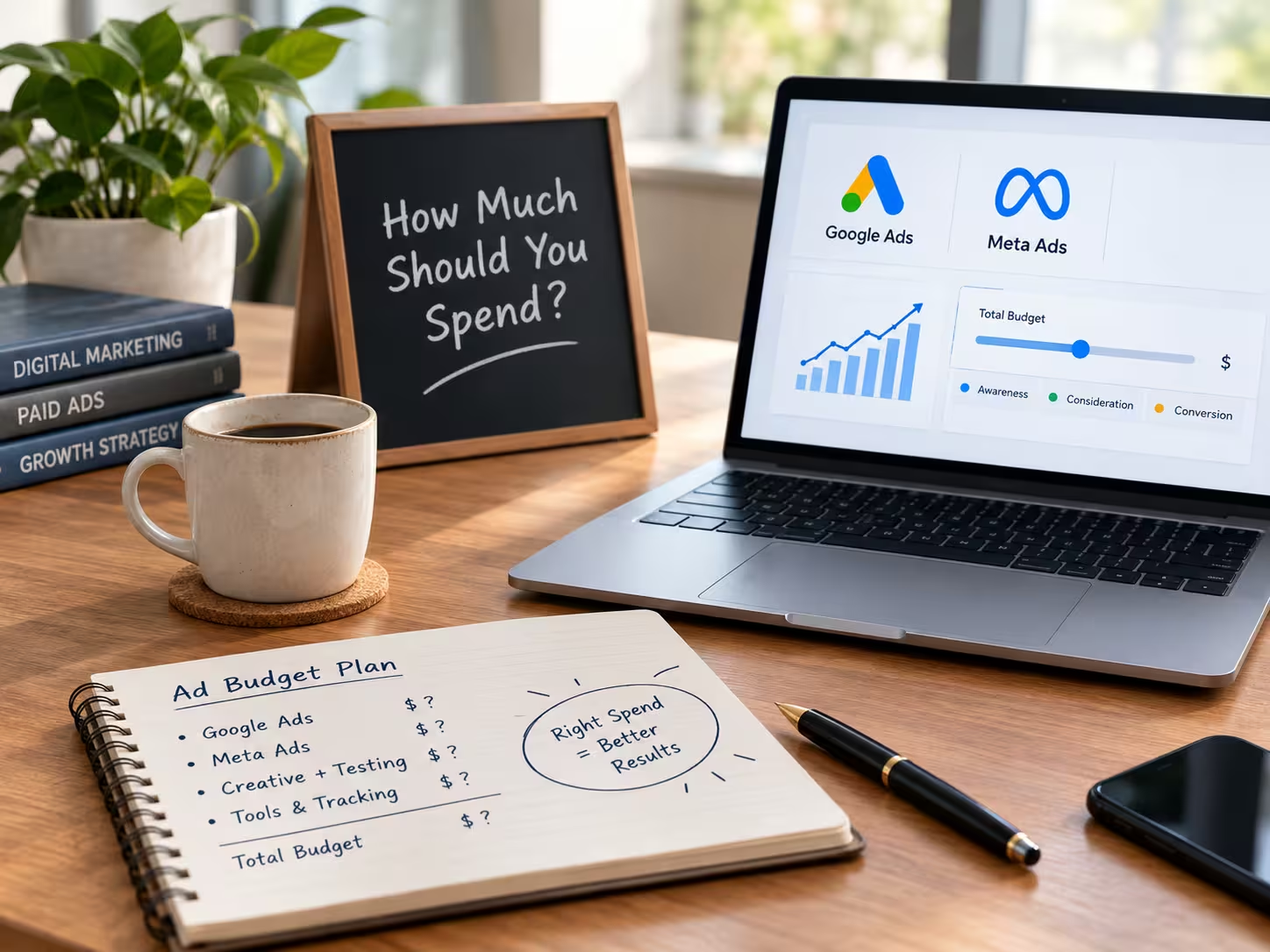
Some marketers recommend spending aggressively from day one. Others suggest starting with the smallest budget possible. The reality lies somewhere in the middle.
The right advertising budget depends on your goals, your industry, your competition, and most importantly, the results you’re trying to achieve.
In this guide, you’ll learn how to think about advertising budgets the right way, what factors influence costs, and how to invest confidently without feeling like you’re gambling with your marketing money.
Why There Is No Perfect Advertising Budget
One of the biggest misconceptions in marketing is that there is a universal budget that works for every business.
There isn’t.
A local dentist, a real estate agency, a software company, and an online clothing store all operate in different markets with different customer behaviors. Their advertising costs, competition levels, and revenue potential vary significantly.
That means asking:
“How much should I spend on ads?”
is similar to asking:
“How much should I spend on my business?”
The answer depends entirely on what you’re trying to accomplish.
A business looking for five new clients each month will have different budget requirements than a business aiming for fifty.
That is why smart advertising always starts with goals, not numbers.
Start With Your Business Goal
Before discussing budgets, think about what success looks like for your business.
Do you want more:
- Leads?
- Sales?
- Phone calls?
- Website visitors?
- Brand awareness?
- Store visits?
Your objective determines both your strategy and your budget.
For example, a local service business focused on lead generation may only need to reach a small geographic area. Meanwhile, an eCommerce brand selling products nationwide will need a broader audience and larger investment.
When your goal is clear, budgeting becomes much easier.
The Question Most Businesses Forget To Ask
Instead of asking:
“How much should I spend?”
Ask:
“How much is a customer worth to my business?”
This single question changes everything.
Let’s say your average customer generates ₹20,000 in revenue.
If your advertising generates a new customer for ₹2,000, most business owners would consider that a good investment.
However, if a customer only generates ₹3,000 in revenue and costs ₹2,500 to acquire, your margins become very tight.
Understanding customer value helps you decide how aggressively you can advertise while remaining profitable.
Why Small Budgets Often Fail
Many businesses start advertising with the mindset:
“Let’s spend as little as possible and see what happens.”
While this sounds safe, it often creates problems.
Advertising platforms like Google Ads and Meta Ads rely on data. They need enough budget and time to learn which audiences, keywords, and creatives perform best.
When budgets are extremely low, campaigns struggle to gather meaningful data.
As a result:
- Optimization becomes difficult.
- Performance becomes inconsistent.
- Results take longer.
- Business owners conclude that advertising doesn’t work.
In reality, the budget was simply too restrictive to allow the system to learn.
This doesn’t mean you need a huge budget.
It means you need a realistic one.
A Practical Budget Framework
Rather than chasing a magic number, think about your budget in stages.
Testing Stage
At this stage, your goal is learning.
You’re discovering:
- Which audience responds best
- Which messaging works
- Which offers generate interest
- Which platform performs better
Success during this stage isn’t maximum profit.
Success is gaining valuable information.
Growth Stage
Once you identify what works, your focus shifts toward consistency.
This is where budgets increase strategically.
You’re no longer guessing.
You’re investing in proven campaigns and improving performance over time.
Scaling Stage
Scaling begins when your campaigns consistently generate profitable results.
Instead of constantly testing, you’re expanding what already works.
This is where advertising becomes a growth engine rather than an experiment.
Google Ads vs Meta Ads Budget Expectations
Many businesses ask whether Google Ads or Meta Ads require larger budgets.
The answer depends on your market.
Google Ads generally attracts people actively searching for solutions. Because of this intent, clicks often cost more.
Meta Ads often offer lower costs for reach and awareness but may require more creative testing and audience refinement.
Neither platform is automatically cheaper or better.
The platform that produces profitable results is the one that matters.
The Biggest Advertising Mistake Business Owners Make
The most expensive mistake isn’t spending too much.
It’s measuring the wrong thing.
Many people focus on:
- Clicks
- Reach
- Impressions
- Likes
But none of these pay the bills.
What matters is:
- Leads
- Customers
- Revenue
- Return on investment
Advertising should be evaluated based on business outcomes, not vanity metrics.
Final Thoughts
There is no universal advertising budget that guarantees success.
The right budget is one that aligns with your goals, allows enough room for testing, and generates a positive return over time.
Instead of looking for the cheapest way to advertise, focus on building a strategy that produces sustainable growth.
When approached correctly, digital advertising isn’t an expense.
It’s an investment in future business growth.